ARCHIVE ID
CW-DGL-2024-03
CATEGORY
CyberWear
STATUS
Active
CONDITION
Operational
DATAGLOVE
Digital Articulation Tactile Acquisition Gesture Logic Operator Virtual Engagement
Analysis
DATAGLOVE Wearable Analysis Structure
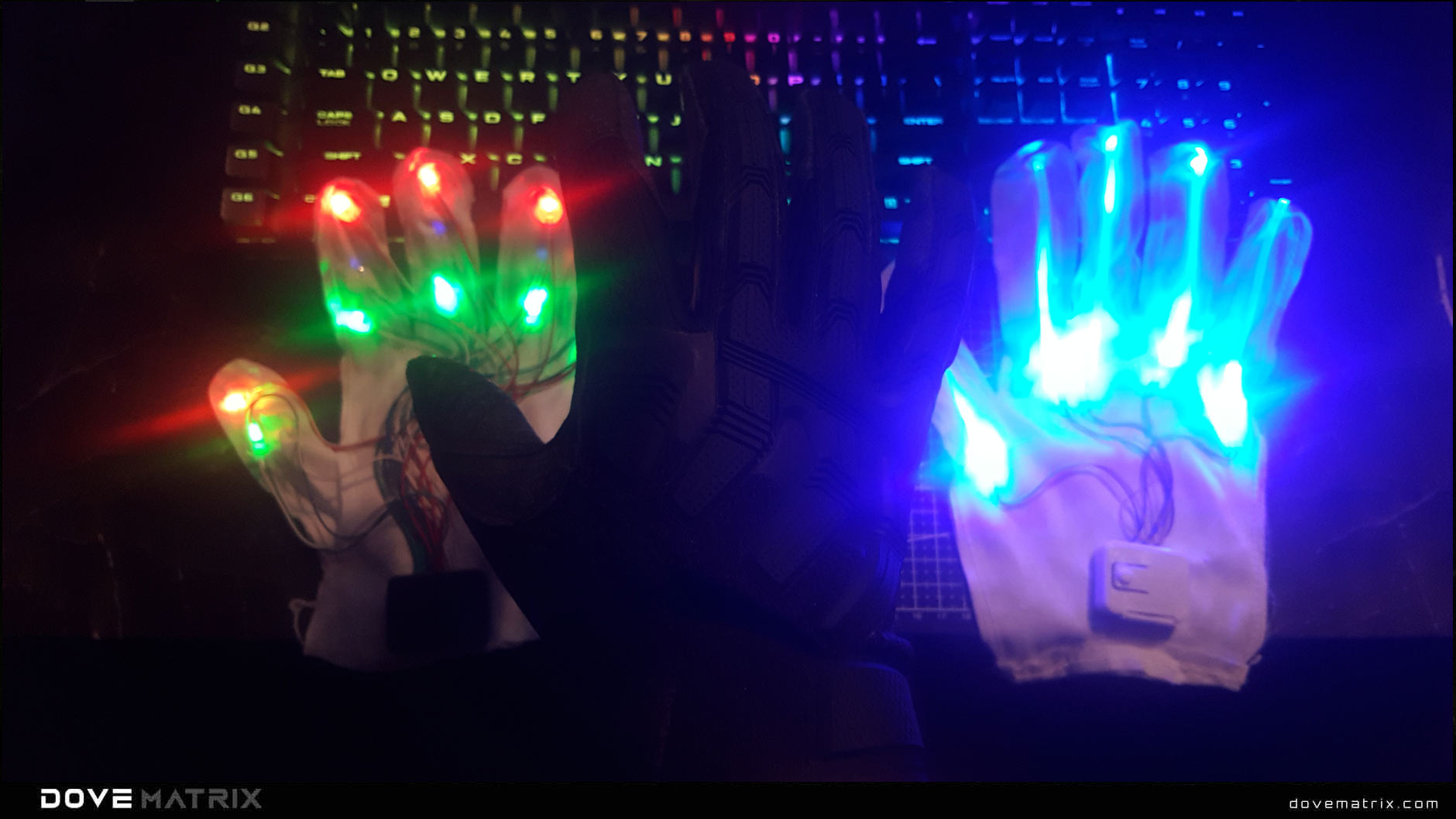
Advanced overlay visualization revealing sensor distribution patterns and haptic actuator placement across the hand surface. Multiple diagnostic layers show flex sensor positions and contact zones.
DATAGLOVE Wearable Analysis Energy
Standard diagnostic mode displaying the DATAGLOVE in its primary operational state. Haptic sensors, finger tracking arrays, and force feedback actuators visible for baseline analysis.
DATAGLOVE Wearable Analysis Signal
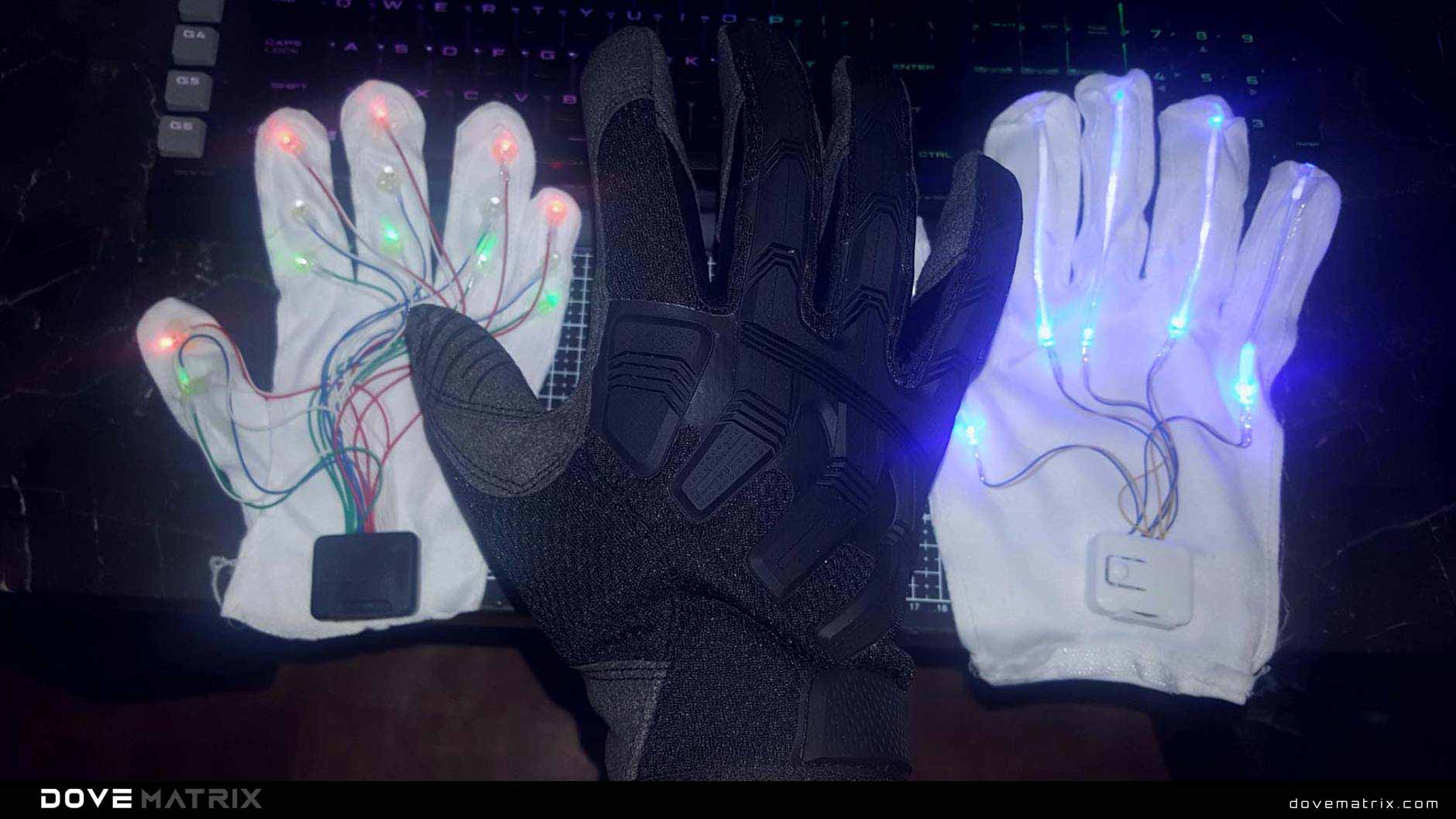
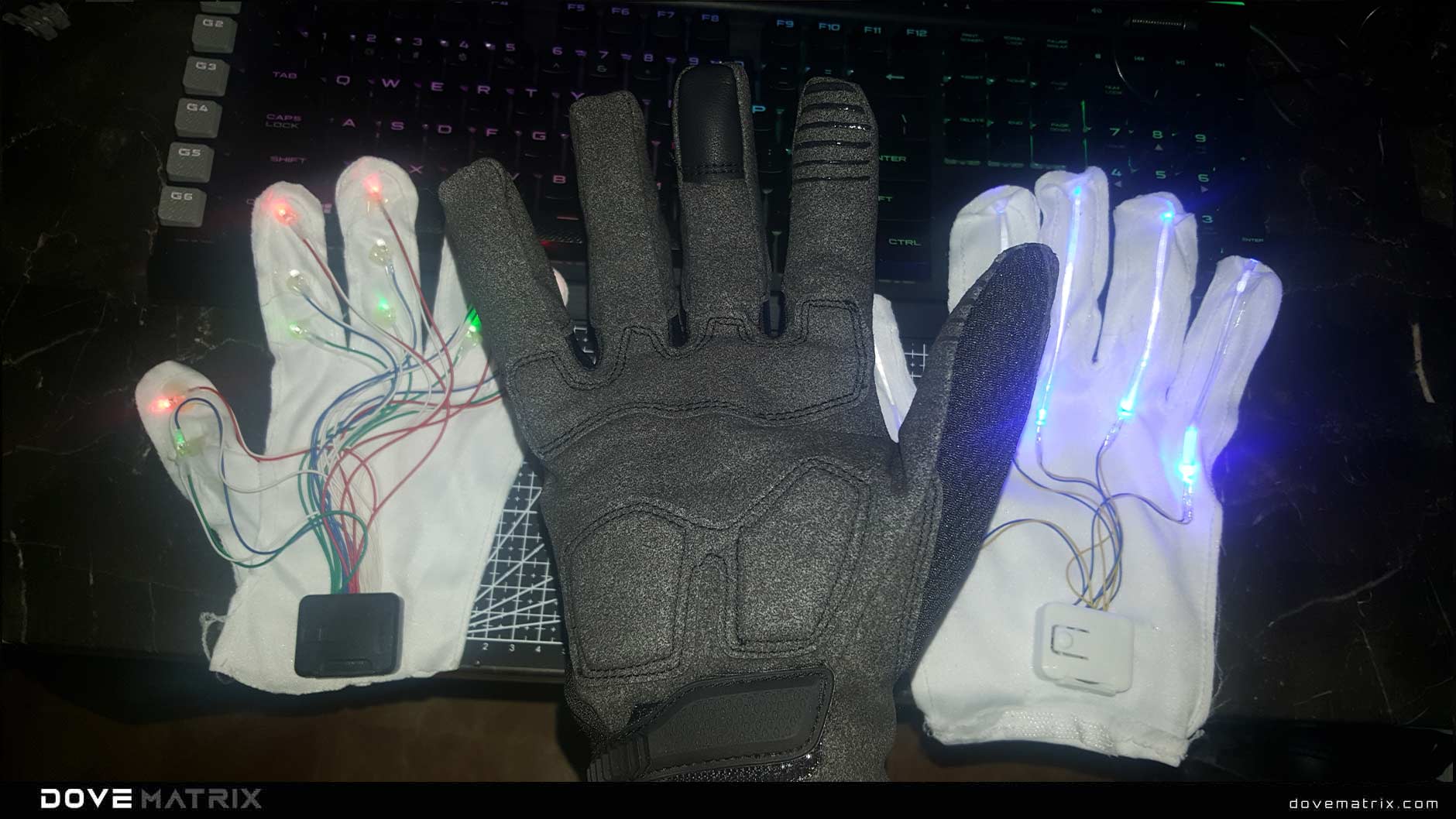
Internal sensor network and actuator pathways analysis exposing the flex sensors across finger joints and embedded gyroscopes for orientation tracking. Shows complete wiring harness and signal routing.
Profile
Overview
DATAGLOVE is an advanced haptic control glove designed to provide bidirectional interaction between user and virtual environments through comprehensive hand tracking and force feedback. Unlike standard input devices, DATAGLOVE operates as both a precise gesture capture system and a tactile output interface.
The device integrates flex sensors across all finger joints and embedded actuators throughout the palm and fingertips, enabling complete hand gesture recognition with immersive tactile response. Features finger tracking with sub-millimeter precision at 120Hz update rate, force feedback actuators providing 0-10N resistance across fingertips, gyroscopic hand orientation tracking for six-degree-of-freedom capture, haptic sensation rendering for texture and pressure simulation, gesture recognition supporting 200+ distinct hand poses, and wireless connectivity with <5ms latency for real-time interaction.
Architecture
The DATAGLOVE operational architecture employs distributed sensor polling combined with centralized gesture processing to maintain real-time hand state awareness. Core functions include continuous flex sensor sampling, gyroscopic orientation updates, gesture pattern matching algorithms, haptic driver control, and bidirectional data stream management.
Activation requires initial fit confirmation through sensor contact verification across all measurement points. The device maintains continuous tracking of hand position, finger articulation, and orientation while simultaneously processing haptic feedback commands from connected systems, ensuring seamless integration between physical hand movement and virtual object manipulation.
Behavior
Wearable calibration requires personalization to individual hand dimensions and movement patterns to maintain gesture accuracy. Primary calibration involves hand size measurement and sensor baseline adjustment, finger range of motion mapping for each joint, grip strength calibration for force feedback scaling, and neutral pose definition for orientation reference.
User-specific profiles store calibration data for multiple operators, enabling rapid switching between different hand sizes without recalibration. Verification cycles are recommended before each extended usage session to account for daily variations in hand physiology and environmental factors affecting sensor response.