ARCHIVE ID
HG-CST-2024-02
CATEGORY
HoloGrids
STATUS
Active
CONDITION
Operational
CONSTELLATION
Celestial Orbital Navigation Stellar Tracking Exploration Location Luminous Astronomical Three-dimensional Interactive Observation Network
Analysis
CONSTELLATION Stellar Analysis Structure
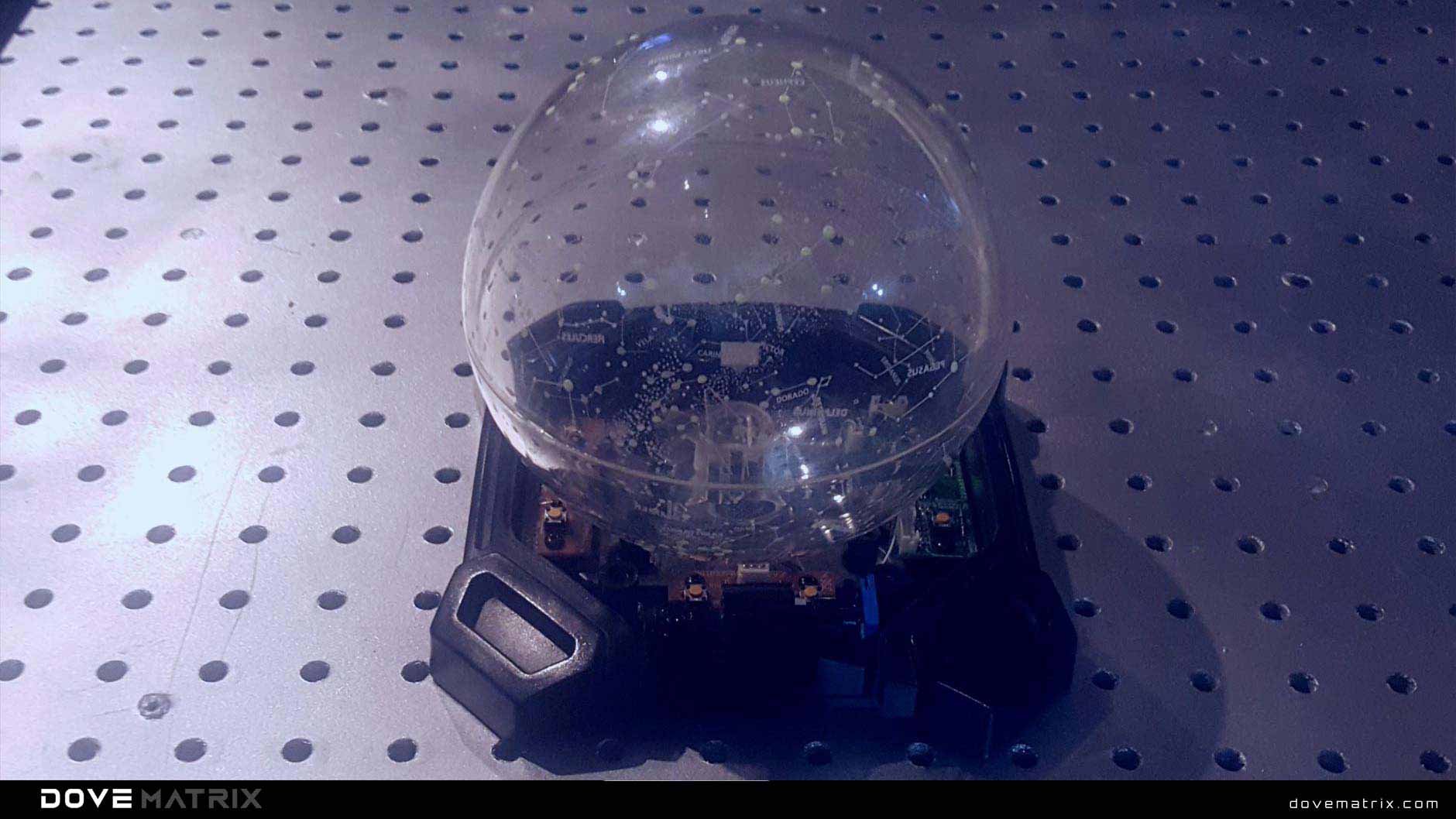
Enhanced visualization revealing celestial coordinate grids and orbital path projections across the holographic volume. Multiple diagnostic layers expose stellar position accuracy and navigation pathway routing.
CONSTELLATION Stellar Analysis Energy
Standard diagnostic mode displaying the holographic star mapping system in its primary operational state. All celestial projection components visible for baseline astronomical navigation and stellar positioning analysis.
CONSTELLATION Stellar Analysis Signal
Internal projection mechanism analysis exposing laser emitter arrays, beam routing pathways, and volumetric rendering matrices. Critical for understanding holographic generation architecture.
Profile
Overview
CONSTELLATION is a holographic star mapping system that projects celestial coordinates and orbital mechanics in three-dimensional space. Unlike traditional planetarium displays, CONSTELLATION generates true volumetric holograms enabling operators to navigate around and through stellar projections for comprehensive spatial analysis.
The system employs multi-source laser projection arrays to create accurate star fields updated from astronomical databases in real-time. Core capabilities include stellar position tracking with arc-second precision, parallax rendering that adjusts perspectives as operators move, interactive gesture control for zoom and rotation, and temporal simulation showing orbital mechanics across millennia with celestial mechanics accuracy.
Architecture
CONSTELLATION operates through a distributed laser projection architecture that generates interference patterns in mid-air, creating volumetric stellar displays. The system continuously synchronizes with astronomical databases to ensure accurate celestial positioning and tracks operator movement to maintain proper parallax perspectives.
Core operational modes include real-time stellar navigation showing current cosmic positions, historical playback revealing stellar movements across centuries, predictive projection modeling future orbital configurations, and educational mode highlighting specific constellations and celestial phenomena. The holographic volume supports multi-user interaction with each operator able to independently control viewpoint and scale while sharing the same stellar projection space.
Behavior
Celestial position calibration requires precise alignment of laser emitter arrays and synchronization with astronomical reference databases. Primary calibration procedures include laser convergence alignment for accurate focal points, database synchronization ensuring current stellar positions, parallax calibration matching operator tracking systems, and temporal simulation accuracy verification against known orbital mechanics.
Critical calibration parameters include arc-second positioning accuracy maintained within 0.5 arc-seconds, holographic volume stability across 3-meter cubic space, and database update frequency set to hourly synchronization intervals. Environmental factors affecting calibration include ambient light interference requiring controlled lighting conditions and air turbulence impacting holographic stability necessitating climate-controlled operation environments.