ARCHIVE ID
QL-CRS-2024-02
CATEGORY
QuantumLattice
STATUS
Active
CONDITION
Operational
CRYSTALSOCKET
Crystalline Resonance Yield Signal Transmission Alignment Lattice Synchronization Optical Connection Kinetic Energy Transfer
Analysis
CRYSTALSOCKET Lattice Analysis Structure
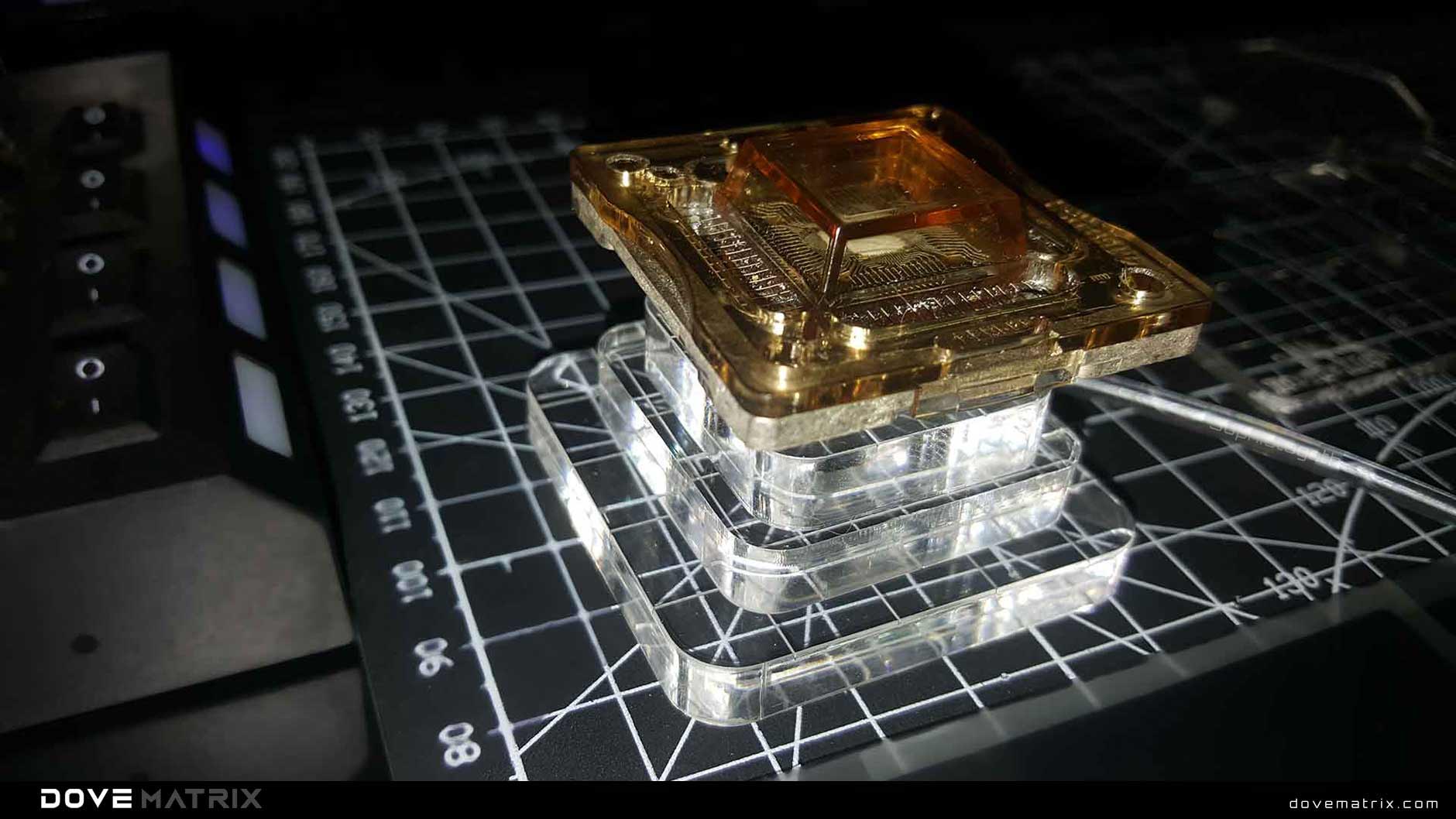
Advanced visualization revealing harmonic resonance pathways and quantum coherence fields across the crystalline matrix. Diagnostic overlays expose frequency alignment patterns and multi-channel data stream routing throughout the lattice structure.
CRYSTALSOCKET Lattice Analysis Energy
Standard diagnostic mode displaying the crystalline data junction in its primary operational state. All geometric resonance nodes and molecular lattice structures visible for baseline high-bandwidth connection analysis.
CRYSTALSOCKET Lattice Analysis Signal
Internal molecular structure analysis exposing atomic lattice arrangements, resonance chamber geometry, and quantum state preservation mechanisms. Critical for examining crystalline junction integrity and coherence boundary conditions.
Profile
Overview
CRYSTALSOCKET is a crystalline-structured data junction enabling high-bandwidth connections through geometric resonance patterns rather than conventional electrical conductors. Unlike traditional copper or optical interfaces, CRYSTALSOCKET leverages molecular lattice structures to create natural resonance pathways that eliminate signal resistance and enable bandwidth multiplication through harmonic frequency alignment.
The system employs a synthetic crystal matrix supporting terahertz-range signal propagation through precisely engineered geometric resonance nodes. Core capabilities include near-zero latency transmission through quantum-coherent state preservation, simultaneous multi-channel data streaming across harmonic frequencies, bandwidth multiplication via resonance amplification reaching theoretical limits of 100x conventional connections, and self-organizing signal routing that adapts to data flow patterns without external control systems.
Architecture
CRYSTALSOCKET operational architecture implements a multi-faceted junction system where each crystal face serves as an independent data gateway while maintaining quantum coherence across the entire lattice structure. Data signals entering through any facet propagate through geometric resonance pathways, automatically finding optimal transmission routes through harmonic frequency matching.
The crystalline matrix operates continuously in a quantum-coherent state, with signal processing occurring through resonance amplification rather than traditional switching. Multi-channel operation employs harmonic frequency separation, allowing dozens of independent data streams to coexist within the same physical lattice without interference. Connection integrity monitoring leverages coherence field strength measurements, automatically adjusting resonance parameters to maintain optimal bandwidth as environmental conditions fluctuate.
Behavior
Junction calibration requires precise harmonic frequency alignment and verification of quantum coherence preservation across all crystal facets. Primary calibration procedures include resonance frequency tuning to establish optimal harmonic relationships, coherence field verification ensuring quantum state preservation, geometric alignment confirming atomic lattice orientation accuracy, and bandwidth characterization mapping maximum data throughput across all available channels.
Critical calibration parameters include harmonic frequency deviation maintained below 0.01 Hz across all resonance nodes, coherence field strength exceeding 0.95 correlation coefficient between all junction facets, and signal propagation velocity achieving 99.7% theoretical maximum for the crystal lattice structure. Environmental considerations include temperature stability within ±0.5°C to prevent thermal decoherence and vibration isolation below 10µm displacement to maintain atomic lattice alignment accuracy.